

Followers
How to get more subscribers on YouTube (and how to see them)
What makes a viewer press subscribe, where to see your subscribers in YouTube Studio, why that list is short, and what buying subscribers will not do.
YouTube · Views
YouTube recommends videos people click and keep watching. Here is what moves views, how Shorts fit in, and what bought views do and do not do.
Views on YouTube come from two decisions a stranger makes. Do they click, and do they stay. YouTube’s own page on recommendations says the system watches for exactly those two things.
So the work splits in two. The title and thumbnail win the click. The first 15 to 30 seconds win the stay. A video that does both gets recommended to more people, and the count climbs on its own.
This guide covers how the system picks videos, what moves views on long videos and on Shorts, why views drop, and what bought views do and do not do.
YouTube describes its recommendation system on its How YouTube Works page. Four points matter for anyone trying to get more views.
It follows viewers, not videos. The system does not push a video out to everyone. It looks at each person and asks which videos that person would enjoy. What they watched before is a big part of that.
It measures clicks and watch time. Click-through rate tells it whether the thumbnail and title work. Watch time and average view duration tell it whether the video kept its promise. Satisfaction surveys tell it whether people were glad they watched.
Subscriber count is not the driver. A small channel with a video people finish beats a big channel with a video people leave.
Home, Suggested and Search are separate. A video can do well in Search and never show up on Home. Each surface has its own signals, so a video that fails on one is not dead.
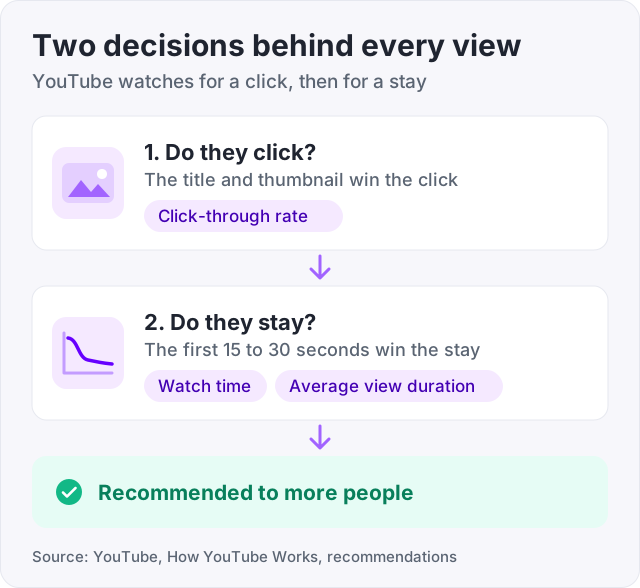
Here is what YouTube’s guidance and Backlinko’s tactics list agree on. In the order it happens for a viewer.
The thumbnail is seen first, and it is seen small. Backlinko’s advice is clear and high contrast, with the concept tested before you film. The title then sets up a question or names a problem, and the two must tell one story. A thumbnail that says one thing and a title that says another gets scrolled past.
Skip bait. A title that promises more than the video gives wins the click and loses the watch, and YouTube’s system counts both.
Backlinko and most creators put the retention cliff in the first 15 to 30 seconds. Cut the greeting and the channel intro. Start on the thing the title promised, then tell the viewer what comes next.
Tip: watch your own retention graph in YouTube Studio. Find the second where the line drops fastest, and rewrite that part of your next video. One fix at a time.
Chapters let a viewer jump to the part they came for instead of leaving. Backlinko lists them as one of the simplest wins, because they cost nothing after the video is done.
Search is its own surface. Backlinko’s advice is to put the words people search into the title, in plain language. Our free YouTube tag generator helps with the tags that go with them.
A consistent upload schedule is on every list for a reason. Each video gives the system a fresh chance to find new viewers, and viewers who liked the last one are watching for the next.
The last 20 seconds of a video should point to another video of yours. A viewer who watches two videos in a row gives the system a strong signal about your channel.
Shorts are the fastest way to reach people who have never seen your channel. Backlinko lists them as a way to pull in new viewers, and YouTube shows them to people based on what they watch, not who they follow.
A few things change with Shorts.
Shorts views and long-form watch hours are separate for the Partner Program, so pick the path that fits your content. Our guide on how to get more subscribers on YouTube explains how Shorts turn into subscribers.
YouTube’s help page on promoting videos gives two official paid routes. A Google Ads video campaign, or the Promote button inside YouTube Studio. Both show your video to people as an ad, and both charge you for it.
The free routes are the ones above. A Short that points to the long video. End screens on your other videos. A playlist that includes it. And sharing it where your audience already is.
Promotion of any kind gets the first views. It does not decide what happens after. If the first 30 seconds lose people, paid views lose people too.
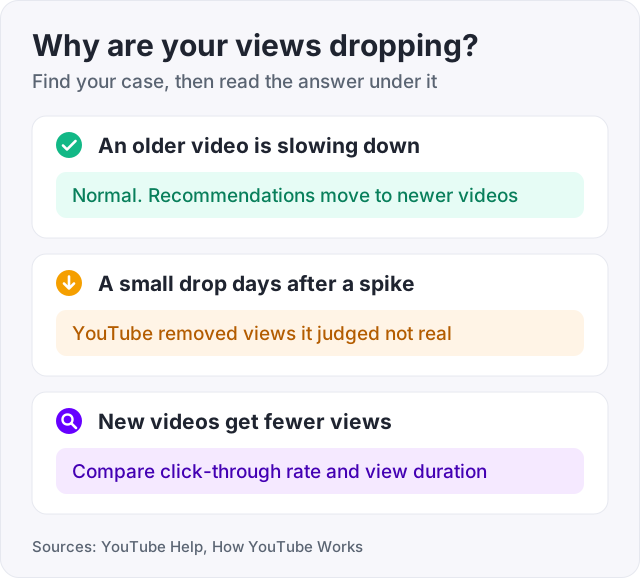
On older videos, dropping views are normal. Recommendations move to newer videos over time, so a video that got most of its views in its first weeks slows down. That is the system working, not a penalty.
Views can also fall because YouTube removed some. Its help page on engagement metrics says it checks that views come from real people, and it can adjust counts after the fact. A small drop days after a spike is usually this.
If your new videos are dropping, that is different. Open YouTube Studio and compare click-through rate and average view duration with your older videos. One of those two numbers has moved, and it will tell you which half of the job to fix.
From August 24, 2026 a view is counted the moment a video starts to play (YouTube Help). That applies to Shorts, long videos and live streams. Earnings still use engaged views, which is a stricter count.
That means the number under your video will look bigger than it used to for the same video. Nothing changed about who watched. Our guide on what counts as a view on YouTube covers own views, replays and frozen counts.
We sell YouTube views at 1,000 for $12.95, and here is how they work. They are delivered through YouTube’s own ad system. That means real people are shown your video as an ad and choose to watch it. Because they are ad views, they are legitimate views, and YouTube’s help notes that ad-served views count as views.
Here is what that gets you. A higher public view count on a video that would otherwise sit at 40 views. For a new channel, that changes how the next viewer reads the video.
Here is what it does not get you. Ad views do not come with high retention. Someone who was shown your video as an ad has less reason to stay than someone who searched for it. They do not turn into subscribers on their own. And they do not make YouTube recommend the video, because that depends on how long people watch, not how many started. Ad views cost more than bot views for exactly this reason. They are real, and real people can leave.
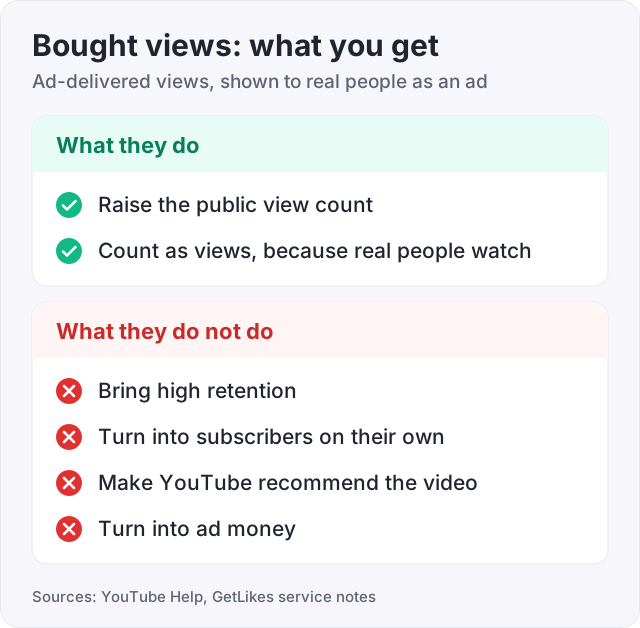
Bought views also do not turn into money. Earnings use engaged views, and at the rates YouTube pays, 1,000 views earn far less than they cost. Our guide on how much YouTube pays per 1,000 views shows the maths.
Watch out: views from programs or click farms get removed. YouTube checks that views come from real people and adjusts counts when they do not (YouTube Help). Cheap views that vanish a week later are worse than no views.
Do that for ten videos and you will know which half of the job is yours to fix. The count follows from there.
YouTube says its system follows viewers, not videos. For each person it asks whether they are likely to click a video and whether they will keep watching it. It uses click-through rate, watch time, average view duration, satisfaction surveys and what that person watched before (YouTube, How YouTube Works). Home, Suggested and Search are separate systems, so a video can do well on one and not the others.
There is no fixed benchmark, because YouTube ranks each video for each viewer. For a channel that usually gets 200 views in a day, 2,000 is a breakout. For a channel that averages 20,000, it is a slow day. Compare each video to your own average in YouTube Studio, and look at how long people watched, because that is what decides whether the video keeps getting recommended.
Shorts are shown to people who do not follow you, so the first second has to make sense with no context. Start on the action, not on a greeting. Keep the whole Short on one idea. Post them on a schedule, and end each one with a reason to visit the channel. From August 24, 2026 a Shorts view is counted the moment it starts to play (YouTube Help).
On older videos this is normal. YouTube moves recommendations to newer videos over time, so a video that got most of its views in its first weeks slows down. Views can also fall if YouTube removes views it judges to be invalid (YouTube Help). If new videos are dropping too, look at your click-through rate and your first 30 seconds in YouTube Studio.
The official paid way is a Google Ads video campaign, or the Promote button inside YouTube Studio (YouTube Help). Both show your video to people as an ad. The free ways are Shorts that point to the long video, end screens on your other videos, a playlist that includes it, and sharing it where your audience already is. Promotion gets the first views. Retention decides what happens after.
It depends on how they are delivered. Views from programs get removed, because YouTube checks that views come from real people (YouTube Help). Views delivered through YouTube ads are real people who were shown the video and chose to watch, so they count as views. They are still not the same as engaged views, which is what YouTube uses for earnings. Ad views raise the count. They do not make the video better.
The facts in this guide come from the places below. We check them again each time the guide is updated.
The services and free tools this guide talks about, with the prices you actually pay.
More YouTube guides from the same team.
Followers
What makes a viewer press subscribe, where to see your subscribers in YouTube Studio, why that list is short, and what buying subscribers will not do.

Views
From August 24, 2026 a YouTube view counts the moment a video starts to play. Here is how own views, replays, frozen counts and engaged views work.
Views
YouTube does not pay per view. It pays a 55 percent share of ad revenue. Most creators earn $1 to $30 per 1,000 views. Here is why, and what Shorts pay.