

Views
What counts as a view on YouTube after the August 2026 change
From August 24, 2026 a YouTube view counts the moment a video starts to play. Here is how own views, replays, frozen counts and engaged views work.
YouTube · Buying safely
Not all bought YouTube views are the same. Bot views get removed and can end a channel. Ad-delivered views are real people. Here is how to tell them apart.
A real YouTube view is a real person who chose to press play, or who was shown your video and watched it. A bot view is a script or a click farm pretending to be a person. YouTube checks every view, removes the ones it judges invalid, and can terminate a channel that buys them (YouTube Help, Fake engagement policy).
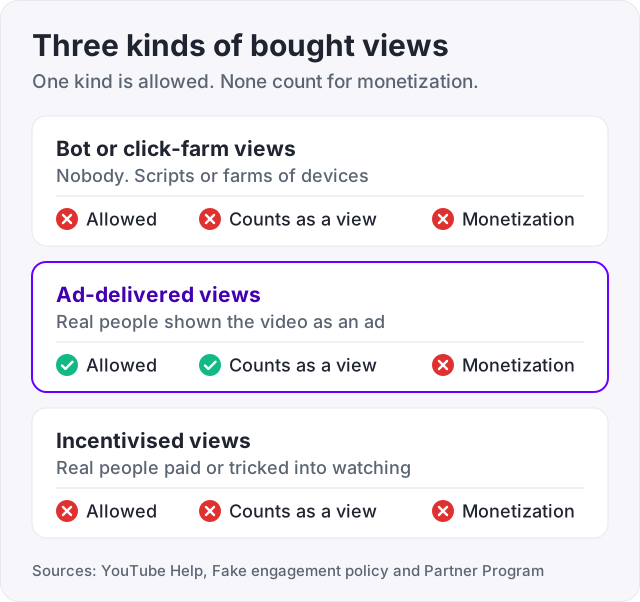
“Bought views” covers three different things. Bot views are fake and against the rules. Views from real people who saw your video as a YouTube ad are real and allowed. Views from people paid or tricked into watching are real people but still against the rules.
This guide shows how to tell the three apart, what YouTube’s policy says in plain words, and how to check your own traffic in YouTube Studio. It also says exactly what the views we sell are.
| Kind | Who is watching | Allowed by YouTube? | Counts as a view? | Counts toward monetization? |
|---|---|---|---|---|
| Bot or click-farm views | Nobody. Scripts or farms of devices | No. Fake engagement policy | Removed on review | No |
| Ad-delivered views (Google Ads, YouTube Promote) | Real people shown the video as an ad | Yes | Yes | No. Ad-campaign hours are excluded |
| Incentivised views | Real people paid or tricked into watching | No. Fake engagement policy | Removed on review | No |
The middle row is the one most “buy views” sites blur. Real people watching an ad placement is what YouTube’s own Promote feature does. It is allowed. It still does not count toward the Partner Program’s watch hour threshold, because YouTube’s rule excludes ad campaigns (YouTube Help, Partner Program overview).
The other two rows share one fate. YouTube removes the views and may remove the channel.
The policy is short, and it is worth reading in plain words (YouTube Help, Fake engagement policy).
YouTube does not allow anything that artificially increases views, likes, comments or other metrics. That includes automated systems, and it includes serving videos to unsuspecting viewers. Channels that break the rule can have content removed or be terminated.
One line matters most if you are thinking of hiring help. If you pay someone to promote your channel, their methods count as yours. “I did not know the seller used bots” is not a defence.
YouTube defines legitimate engagement as a real human choosing to interact. That is the test. A bot cannot choose. A person watching an ad can.
It knows when the views are fake. YouTube Help’s page on how engagement metrics are counted says views are verified to come from real people, invalid views are removed, and counts can drop later after a review. A spike of bot views is easy for that system to spot and strip out.
The same page says that since August 24, 2026 a public view counts when playback starts, while earnings use engaged views (YouTube Help). So a bot can inflate the public number for a while. It cannot touch the number that pays.
YouTube does not flag ad-delivered views, because those come through its own ad system. They show up in your analytics under a named source, which brings us to the next section.
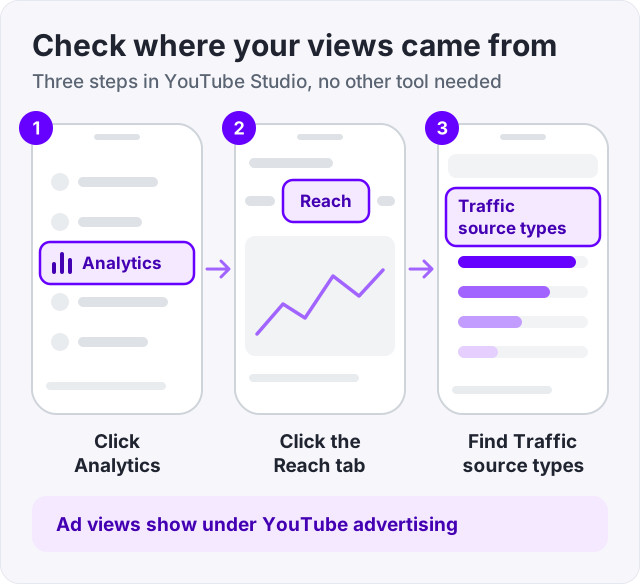
You do not need a third-party tool. YouTube Studio shows where every view came from.
Here is what each source tells you.
Browse features, Suggested videos, YouTube search, External. These are organic. A real person found your video on the home page, next to another video, in search, or on a link outside YouTube.
YouTube advertising. These are ad-delivered views. Real people, real devices, shown the video as an ad. If you bought ad-delivered views, they show here.
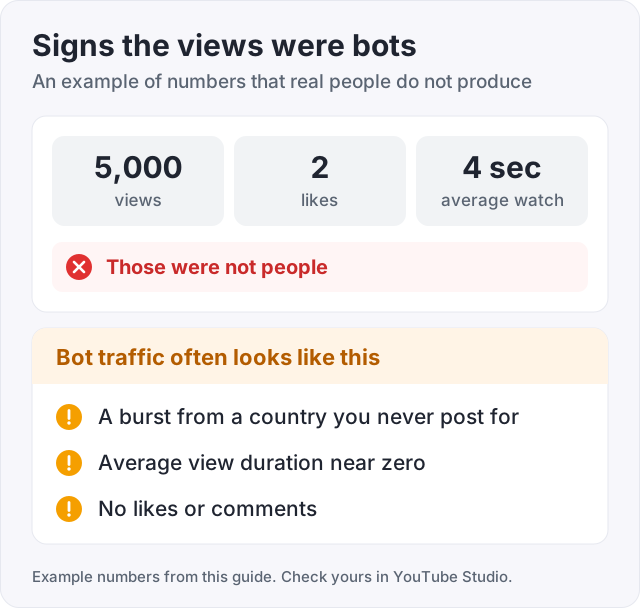
Odd patterns. Bot views often show as a burst of traffic from a single country you never post for, average view duration near zero, and no likes or comments. If a video got 5,000 views and 2 likes with an average watch time of 4 seconds, those were not people.
Tip: compare average view duration by traffic source. Search views usually watch longest. Ad views watch less. Bot views barely register.
Our guide on what counts as a view on YouTube explains the counting rules in more detail.
No. There is no law against buying views. The risk is YouTube’s policy, not the courts.
That risk is real. Under the fake engagement policy, bought bot views can lead to content removal or channel termination (YouTube Help). The channel is the thing you can lose, and you cannot appeal to a judge about it.
You can, if the views are bot or incentivised views. That is the kind the policy names. Ad-delivered views are the exception, because they run through YouTube’s own system, and YouTube’s own Promote feature works the same way.
The question to ask any seller is simple. Where do the views come from? If the answer is not “YouTube ads”, assume bots.
Less than a bought batch costs, in every case.
There is no fixed value for a view. Influencer Marketing Hub’s 2026 report puts creator ad earnings at roughly $1 to $30 per 1,000 views, depending on the niche. That range is reported by a third party, not published by YouTube, and it applies only to monetized channels.
Two more limits. Earnings are based on engaged views, not the public count (YouTube Help, How engagement metrics are counted). And a channel that is not yet in the Partner Program earns nothing per view at all. So 1,000 bought views cannot pay for themselves. Anyone selling views as an investment is selling something else.
Real views bring watch time, and watch time is what YouTube’s recommendation system reads. Bot views bring a number that gets deleted.
Real views can bring likes, comments and subscribers. Bots do none of that, and a video with big views and no reactions looks stranger than a video with small views.
Real views from search and suggested count toward the 4,000 watch hours for monetization. Ad views do not, and bot views do not. Our guide on how to get 4,000 watch hours on YouTube covers the exact rule. If you want more of the search kind, start with the title and tags. Our free YouTube tag generator helps with the second part.
We sell YouTube views, 1,000 for $12.95. They run through YouTube’s ad system. That puts them in the middle row of the table above. Real people, real devices, shown your video as an ad placement.
What they are:
What they are not:
What they are for is a first impression. A video with 9 views looks like nobody wanted it. A video with 1,000 views gets a fair chance from the next real person who finds it. If that is your goal, ad-delivered views do it safely. If your goal is monetization, spend the money on a better video instead.
Watch out: if a seller promises “real views” at a price far below what an ad would cost, ask how. Real people cost money to reach. Bots are cheap because they are not people.
Yes, in one specific way. Views from real people who see your video as a YouTube ad are real and allowed. YouTube's own Promote feature works this way, and so do our views. Bot views and views from people paid to watch are not real in YouTube's eyes, and both break the fake engagement policy (YouTube Help).
Open YouTube Studio, click Analytics, then the Reach tab, and look at Traffic source types. Organic views show as Browse, Suggested, Search and External. Ad-delivered views show as YouTube advertising. Bot views tend to show odd geography, an average view duration near zero, and no likes or comments to match the numbers.
There is no fixed value. Influencer Marketing Hub reports that creators earn roughly $1 to $30 per 1,000 views from ads, depending on the niche, and only on monetized channels. Earnings are based on engaged views, not the public count (YouTube Help). A batch of 1,000 bought views cannot pay for itself.
Make videos people search for, and make them worth finishing. YouTube's recommendation system reads watch time, so a video that holds attention gets shown to more people. Playlists and end screens keep viewers on your channel. Ad-delivered views can give a new video a first layer of views, but they do not replace the real thing.
It knows when the views are fake. YouTube Help says views are verified to come from real people, invalid views are removed, and counts can drop later after a review. A burst of bot views is easy to spot and strip out. Ad-delivered views are different, because they come through YouTube's own ad system and show up in your analytics as a named source.
No. There is no law against it. The risk is YouTube's fake engagement policy, which can lead to content removal or channel termination for bot or incentivised views (YouTube Help). Ad-delivered views are the exception, since they run through YouTube's own ad system. You cannot lose a court case over it, but you can lose the channel.
The facts in this guide come from the places below. We check them again each time the guide is updated.
The services and free tools this guide talks about, with the prices you actually pay.
More YouTube guides from the same team.
Views
From August 24, 2026 a YouTube view counts the moment a video starts to play. Here is how own views, replays, frozen counts and engaged views work.
Views
YouTube wants 4,000 public watch hours in 12 months before it turns on ads. Here is the exact rule, what does not count, the maths, and what moves it.
Followers
YouTube monetization requirements in 2026: ads need 1,000 subscribers and 4,000 watch hours, fan funding needs 500. The exact rules and how to get there.