

Likes & engagement
How to get more likes on Instagram
Most posts get likes from 2 to 4 percent of followers. Here is what a good number looks like, what makes Instagram show a post to more people, and what fails.
Instagram · Likes & engagement
A good Instagram engagement rate is 1 to 3 percent for most accounts, and small accounts run higher. Here is the formula, the averages, and why rates drop.

Type in the numbers from one recent post. The rate updates as you type.
Formula: (likes + comments) divided by followers, times 100. Run it on three or four posts and use the average.
For most accounts, an Instagram engagement rate between 1 and 3 percent is good, and anything above 3 percent is excellent. That is where Google’s summary and the top-ranking pages land. Hootsuite’s 2026 industry report puts the average at roughly 2 to 4 percent per post, depending on the industry (Hootsuite, 2026).
Small accounts run higher. Accounts under 5,000 followers often see 5 to 10 percent, because a tight group of people reacts more. Rates fall as an account grows, because a bigger audience holds more people who never look.
The calculator above gives your rate from a few recent posts. This guide explains what the number means, where it should sit for your size and industry, why it drops, and what moves it.
Engagement is any action a person takes on your post. Likes and comments are the main ones. Shares and saves count too, and some tools include them.
Engagement rate turns that into a percentage of your audience. That lets you compare a post with 30 likes on 1,000 followers to one with 300 likes on 20,000. The first is at 3 percent. The second is at 1.5 percent. The smaller account is doing better, even though the raw number is lower.
That is why the rate matters more than the count. Instagram ranks each post on how people react to it, not on how many people follow you. A high rate means the people you have are paying attention.
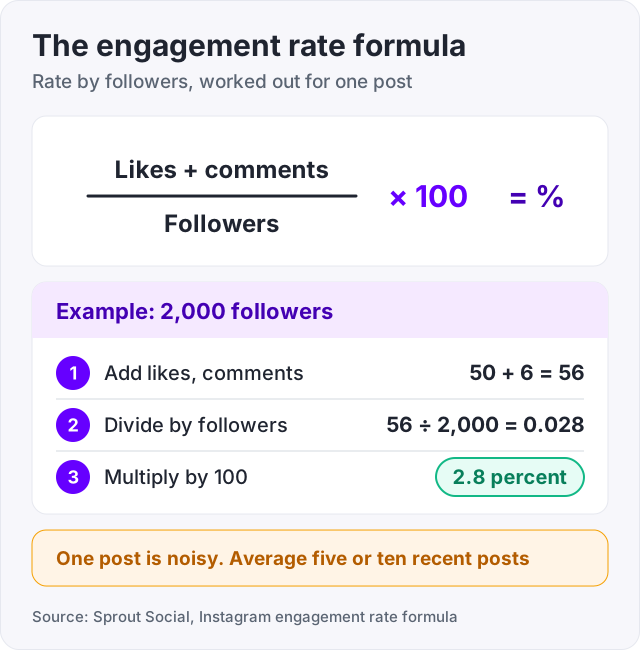
The standard formula, and the one the calculator above uses, is this. Add likes and comments, divide by followers, and multiply by 100.
Work it out per post, then average a few recent posts. One post is noisy. Five or ten posts give a fair picture (Sprout Social, engagement rate formula).
Example. You have 2,000 followers. A post gets 50 likes and 6 comments. That is 56 divided by 2,000, which is 0.028, times 100. Your rate on that post is 2.8 percent.
Some tools divide by reach instead of followers. That is called engagement by reach, and it always gives a higher number, because reach is only the people who actually saw the post. It is a fair way to judge a single post. It is not the number to compare with the industry averages below, which are based on followers.
Tip: use the same formula every time. A rate of 2 percent by followers and a rate of 8 percent by reach can describe the same post. Mixing the two is how people convince themselves things are better or worse than they are.
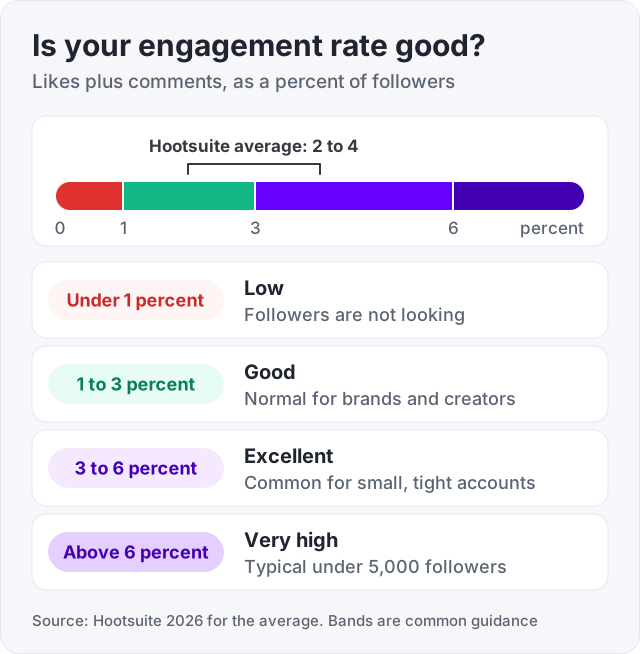
Here is how to read your number once you have it.
| Rate by followers | What it usually means |
|---|---|
| Under 1 percent | Followers are not looking. Often a sign of bought or inactive followers. |
| 1 to 3 percent | Good. Normal for most brands and creators. |
| 3 to 6 percent | Excellent. Common for small accounts with a tight topic. |
| Above 6 percent | Very high. Typical only under 5,000 followers, or after a post took off. |
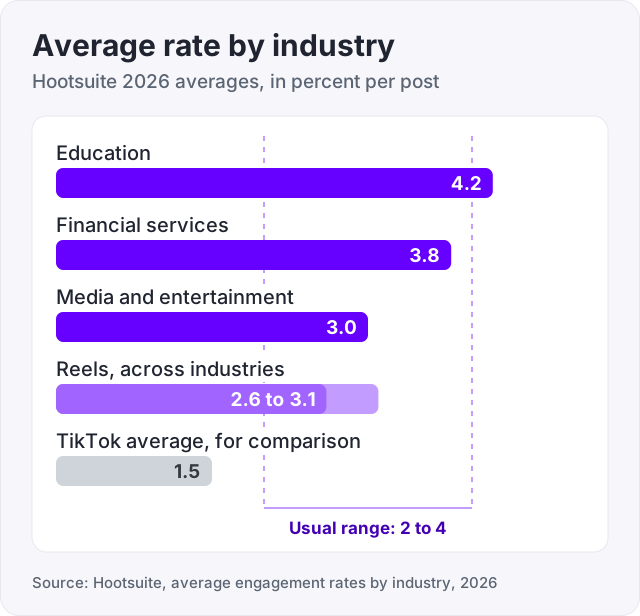
Industry matters. Hootsuite’s 2026 averages put education at 4.2 percent, financial services at 3.8 percent, and media and entertainment at 3.0 percent. Dining and hospitality is among the highest (Hootsuite, 2026). Reels average 2.6 to 3.1 percent across industries. For comparison, the average TikTok rate is 1.5 percent overall.
Account size matters more. A 500-follower account at 8 percent is not doing anything special. A 100,000-follower account at 3 percent is doing very well.
Yes, and it is rare above a few thousand followers. Under 5,000 followers, 5 to 10 percent shows up often, because most of those followers are friends or people who chose the account for one topic. If a large account shows 10 percent, check whether the tool measured by reach rather than followers. That alone can turn 3 percent into 10.
Yes. It sits inside the 2 to 4 percent average from Hootsuite’s 2026 report and inside the 1 to 3 percent band that most guides call good. If you are at 2.5 percent, your content is working. Growth, not engagement, is the next thing to work on.
A falling rate has a short list of causes. Check them in this order.
Your follower count grew faster than your active audience. This is the usual one after a giveaway, a viral post, or a follower purchase. The new followers do not react, so the same likes are divided by a bigger number. How to check: compare likes per post before and after the jump. If likes are flat and followers rose, this is it.
You post less than you used to. Followers drift when the feed goes quiet. How to check: count posts per week this month against three months ago.
You changed what you post. People react to what they followed you for. How to check: scroll your last twelve posts. If the topic moved, the rate moved with it.
You stopped posting Reels and carousels. Rival IQ’s 2025 benchmark found carousels and Reels earn the highest engagement in most industries (Rival IQ, 2025). Single photos are the format most often skipped. How to check: sort your recent posts by format.
Everyone’s rate dropped. Rival IQ’s 2025 report found Instagram engagement fell across the board year on year, with retail and home decor down nearly 30 percent (Rival IQ, 2025). Some of your drop is the platform, not you. How to check: compare with the industry averages above, not with your own numbers from two years ago.
If the drop came with a fall in follower count, our guide on why you are losing followers on Instagram covers that side.
Post carousels and Reels. They earn the most engagement in most industries (Rival IQ, 2025). Turn single photos into short carousels.
Stay in one lane. A tight topic keeps the audience reacting. Rival IQ’s report noted that Higher Ed had the highest engagement despite posting less than the median (Rival IQ, 2025). Posting more is not the fix. Posting the right thing is.
Reply to comments. A reply is a comment. It also brings the person back and shows the next reader that someone is home.
Ask one specific question per caption. Comments are the part of the formula most accounts leave on the table. A real question earns them.
Grow the list with the right people. A smaller list of real people gives a higher rate than a big list of strangers. If you want to grow, grow with people who came for the topic. Our guide on how to get more likes on Instagram covers what earns real reactions.
We sell followers and likes, so this part is plain.
Bought followers lower your engagement rate. They add to the bottom of the formula and nothing to the top. If you buy 5,000 followers and your posts still get 40 likes, your rate falls from a healthy number to well under 1 percent. The table above tells you how that reads.
That is why we tell buyers to keep numbers in proportion. If you add Instagram followers, add likes to match, or the profile looks worse than before. Our Instagram likes start at $2.95 per 100, arrive spread over time, and need only the post link. They lift the top of the formula so the rate stays where it was.
What they do not do is change the real rate. Instagram sees the reactions of real viewers, and bought likes do not comment, save, or share. They make a profile read as normal to a person. They do not make Instagram show the post to more people. If your rate is low because your followers do not care, the fix is content, not a purchase.
Watch out: a rate that looks perfect but comes entirely from bought likes on bought followers is a profile with nobody in it. Brands that check accounts look at the comments, and comments cannot be faked well.
The rate is a thermometer, not a goal. It tells you whether the people you have are still listening. Keep it healthy, and every new follower you add is worth having.
For most brands and creators, 1 to 3 percent by followers is good and above 3 percent is excellent. Hootsuite puts the 2026 average at roughly 2 to 4 percent depending on industry. Small accounts under 5,000 followers often run at 5 to 10 percent because a tight group reacts more. Judge your number against your size and industry, not against a bigger account.
Add the likes and comments on a post, divide by your follower count, and multiply by 100. Do that for five or ten recent posts and average them. A post with 50 likes and 6 comments on 2,000 followers is 56 divided by 2,000, times 100, which is 2.8 percent. The calculator at the top of this page does the sum for you.
Yes, and it is rare above a few thousand followers. Under 5,000 followers, rates of 5 to 10 percent are common because most of those followers chose the account for one topic. If a large account shows 10 percent, check whether the tool measured by reach instead of followers. Engagement by reach always gives a higher number.
Yes. It sits inside the 2 to 4 percent average from Hootsuite in 2026 and inside the 1 to 3 percent band that most guides call good. If you are at 2.5 percent, your content is working and the people you have are paying attention. Growth, not engagement, is the next thing to work on.
Hootsuite puts the 2026 average at roughly 2 to 4 percent per post by followers, depending on the industry. Education sits at 4.2 percent, financial services at 3.8 percent, and media and entertainment at 3.0 percent. Reels average 2.6 to 3.1 percent. Rival IQ found rates fell across the board in 2025, so an older benchmark will read too high.
The usual cause is a follower count that grew faster than the active audience, often after a giveaway, a viral post or a follower purchase. Other causes are posting less, changing topic, or dropping Reels and carousels. Some of the drop is the platform itself. Rival IQ found Instagram engagement fell across industries year on year in 2025.
The facts in this guide come from the places below. We check them again each time the guide is updated.
The services and free tools this guide talks about, with the prices you actually pay.
More Instagram guides from the same team.
Likes & engagement
Most posts get likes from 2 to 4 percent of followers. Here is what a good number looks like, what makes Instagram show a post to more people, and what fails.

Followers
Losing Instagram followers is normal, and most of it is not about you. Here are the seven real causes, how to tell which one it is, and what fixes each.

Likes & engagement
Instagram auto likes send a set number of likes to every new post for 30 days. Here is how the plan works, what it does not do, and what to check first.